Rededication service for German pilot shot down over Porlock 86 years ago
The service in Porlock highlighted the story of community, forgiveness and reconciliation.

Ninety years ago, Emperor Haile Selassie and his family arrived in Bath as exiles, Narinder Tegally, our diocesan Interfaith Adviser shares how the celebrations to mark this historic event are an opportunity for us all to learn about welcome and belonging.
Ninety years ago, Emperor Haile Selassie and his family arrived in Bath as exiles, forced to flee their homeland during a time of great turmoil and suffering in their homeland. They came not as tourists or dignitaries, but as people seeking refuge, safety and peace. Bath welcomed them, and in doing so the city and its people became part of a very special story whose influence can still be felt in the city nine decades later.
Our Interfaith Adviser, Revd Narinder Tegally, was invited to attend the launch of the celebrations marking this special year. Here, she captures the atmosphere of the event and reflects on what the welcome offered to Emperor Haile Selassie, far from home and in a time of need, can teach us today.
As I stood among civic leaders, faith representatives, members of the Ethiopian and Rastafari communities, academics, volunteers and friends of Fairfield House, I became increasingly aware that this was far more than an anniversary celebration. It was a gathering shaped by gratitude, memory, resilience and hope. There was a profound sense that we were not simply looking backwards at history but reflecting upon a living legacy that continues to shape relationships between Bath and Ethiopia.
I was deeply moved by William Heath’s reflections on Fairfield House and his decade-long journey with the community surrounding it. William spoke passionately about his first encounter with Fairfield House in 2016, recognising both its extraordinary historical significance and the challenges it faced. What stood out for me was his vision of Fairfield House as a bridge between cultures, histories and communities. He described it as a portal connecting Bath, Ethiopia, Rastafari traditions and wider questions of justice and identity. His words reminded me that buildings themselves are never the true legacy; rather, it is the stories, relationships and values they embody that matter most.
Professor Shawn Sobers offered another powerful perspective. Growing up in Bath, he had been largely unaware of the city’s deep Ethiopian connections and the significance of Rastafari history in the area. His reflections highlighted how easily important stories can remain hidden. Listening to him, I was reminded of the responsibility we all share to uncover and tell the stories that have shaped our communities. History is not complete unless all voices are heard.
Muhammad Siddique the Lord-Lieutenant of Somerset, representing His Majesty the King spoke not only of Emperor Haile Selassie’s historical significance but of the personal friendships that developed between the Emperor and the people of Bath. His reflections centred on kindness, hospitality and human connection. These themes echoed throughout the evening and seemed particularly relevant at a time when questions of migration, displacement and belonging remain so prominent in our society.
The Imam of Bath Islamic Centre Dr. Mohammed Gamal Abdelnour, recalled the migration of the first Muslims to Ethiopia, where they found sanctuary under a Christian ruler renowned for his justice. It was a beautiful reminder that the values of welcome and protection have deep roots across faith traditions. Hearing that ancient story alongside the story of Emperor Haile Selassie’s exile brought into sharp focus how acts of compassion can echo across centuries.
I was also encouraged by the remarks of the Mayor of Bath, Councillor Ruth Malloy , whose commitment to strengthening relationships between Bath and Ethiopia reflected the spirit of partnership that was evident throughout the evening.
A particularly poignant moment was the tribute to the late Professor Benjamin Zephaniah, a patron and friend of Fairfield House. His words and his legacy seemed to hover gently over the evening. Benjamin had a unique ability to speak of identity, justice and belonging in ways that touched hearts and challenged minds. The tribute reminded us that Fairfield House is not only part of Ethiopia’s story or Bath’s story; it is part of a wider human story about dignity, equality and hope.
As I left the Roman Baths that evening, I carried with me a sense of gratitude and inspiration. I found myself reflecting on how relevant Emperor Haile Selassie’s words remain today. He remembered the kindness shown to him and his family during their years in Bath. That kindness created a bond that has lasted ninety years. It is a powerful reminder that we often do not know the lasting impact of a simple act of welcome.
For me, the evening reinforced the belief that history is not simply something we inherit; it is something we are called to steward. The story of Ethiopia in Bath is a story of exile and belonging, faith and friendship, courage and hospitality. It challenges us to ask how we will respond to those seeking refuge today, how we will care for our shared heritage, and how we will build communities rooted in understanding and respect.
Fairfield House stands as a testament to what can happen when people choose generosity over fear and friendship over division. Ninety years after Emperor Haile Selassie found sanctuary in Bath, that message remains as important as ever.
Revd Narinder Tegally, Interfaith Adviser, Diocese of Bath and Wells.
The service in Porlock highlighted the story of community, forgiveness and reconciliation.
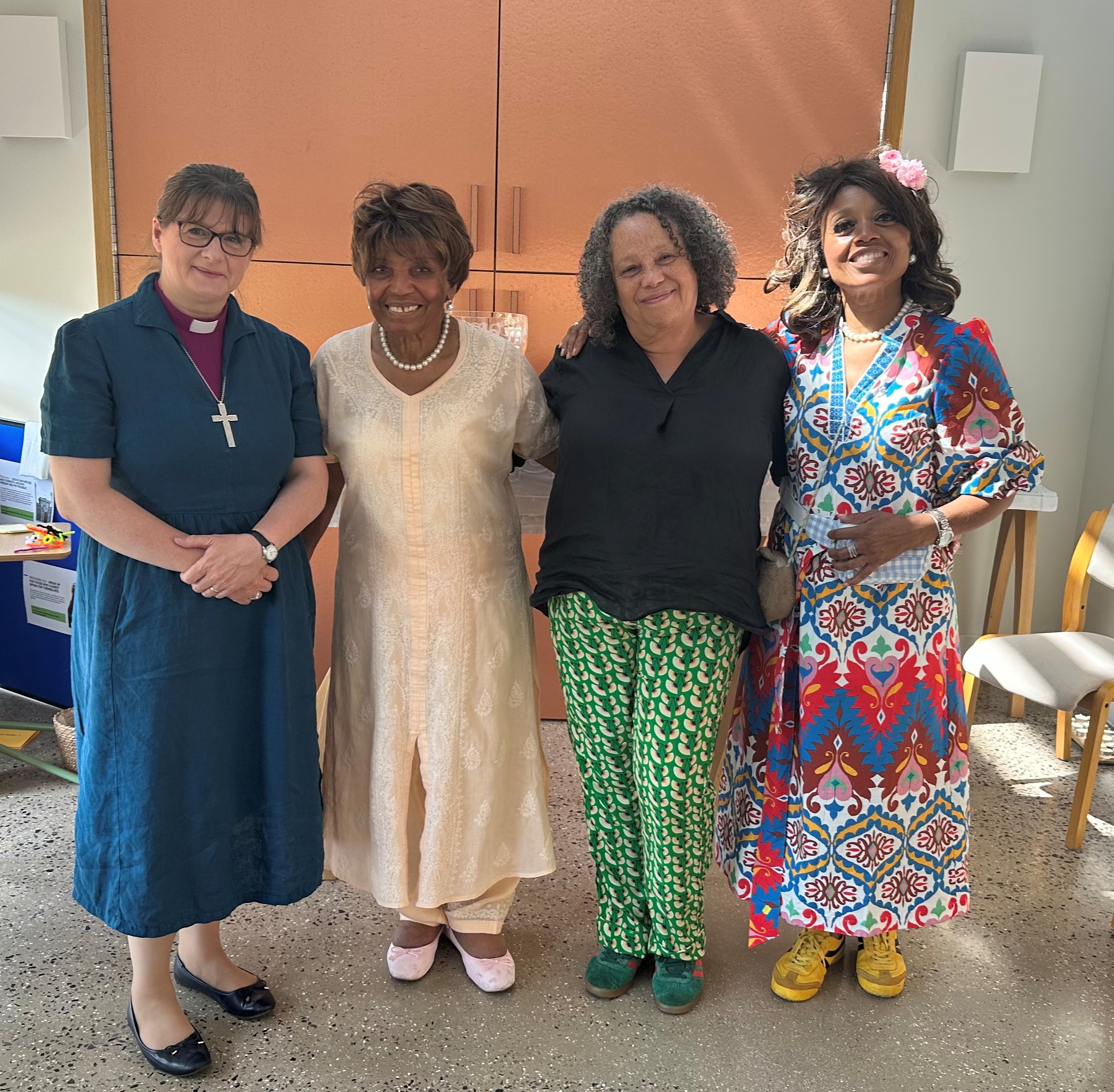
Lynette Richards-Lorde was just 19 in 1959 when she travelled 4,000 miles from her home in Guyana to begin her training as a nurse at Musgrove Park Hospital in Taunton.

We are delighted to welcome Jason Selormey who is a new volunteer member of the From Lament to Action Group.…
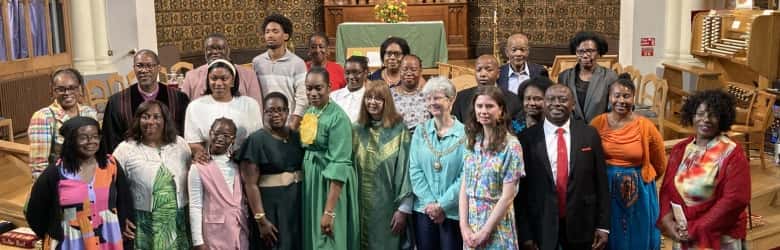
A special Windrush Reflection Service was held at Christ Church, Julian Road, Bath, bringing together people from across the community…
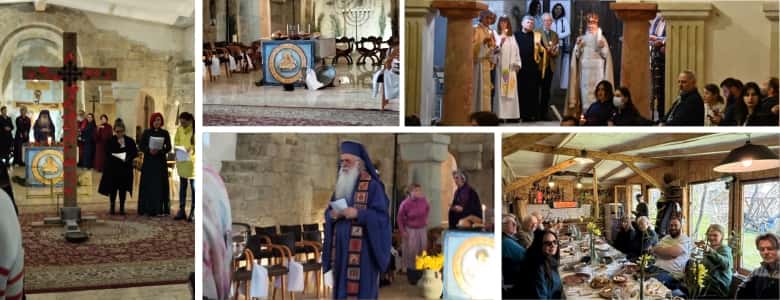
Earlier this year a group of eight members of the Bath Interfaith Group travelled to Tbilisi and spent time with…

Revd Dr Katy Garner, Bath Spa University Chaplain is one of the many representatives from faith groups across Bath and…
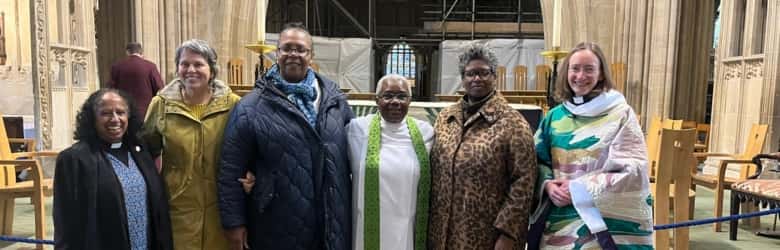
A special service of the Cathedral Eucharist to mark Racial Justice Sunday, was held at Wells Cathedral. The Revd Canon…
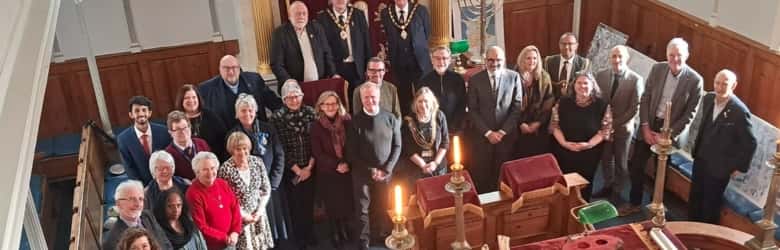
Narinder Tegally, Bath and Wells Interfaith Adviser and Richard Kelley, Chaplaincy Adviser for the diocese were among the civic and…
A detailed report sharing the findings of Racial Justice Consultant Anira Khokhar, who carried out a series of in-depth interviews…
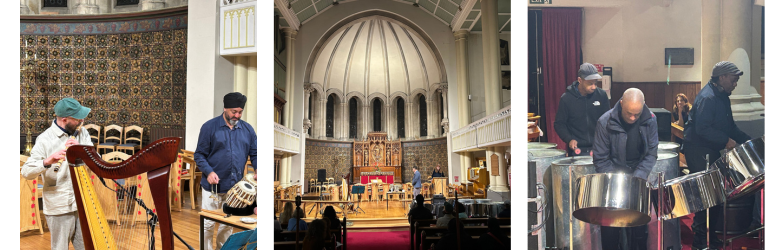
People from across Bath’s faith communities came together at Christ Church in Bath to celebrate Interfaith Week. The team at…