
June Manna mailing and Prayer Calendar
The June issue of the Manna mailing, which is focused on the contribution of all those who volunteer to support…

Revd Dr Ian Mills, Rector, Chew Valley West Benefice, reflects on the significance of life events, baptisms, weddings, and funerals and shares how these sacred moments offer space for faith…

Revd Dr Ian Mills, Rector, Chew Valley West Benefice, reflects on the significance of life events, baptisms, weddings, and funerals and shares how these sacred moments offer space for faith and connection.
A shorter version of this interview is contained in the June edition of Manna magazine.
Because they involve people choosing, for whatever reason, to include us in these milestones in their lives and the lives of their families. They’ve chosen to come to the church or involve the churchcommunity in some way in these moments of great joy, these moments of great sorrow, and vulnerability.
It is a privileged to be involved. It means the church still holds a place in people’s hearts when it comes to life’s big moments. And I really do think everyone has some level of spiritual curiosity. These occasions let them explore that safely, without pressure.
Even if people wouldn’t describe themselves as religious, there’s often something deeper going on. Grief, love, new life—these often stir a desire for connection, re-connection, and meaning. I think these occasions give people an opportunity to push at the door a little bit, it gives them an excuse to open a conversation and to explore their faith curiosity a little bit more.
I always ask couples why they’ve chosen to marry in church. Sometimes it’s one partner’s wish, sometimes it’s shared. I remember one couple who both worked in theatre and lived in Glasgow. They had no local link but really wanted to marry in one of our churches here in the Chew Valley. To do that, they needed to worship here for six months. At first, I worried they would see this only as a legal hurdle to jump over, but over time, it became something they valued. They still talk appreciatively about establishing a connection with the parish here.
I think for some of the younger people who live and work such busy lives, often disconnected lives, who perhaps haven’t had anywhere to call home since they left university or started their careers, getting married in a church and making a connection with a parish gives them that sense of being grounded somewhere. We can give people a sense of rootedness and place. This is very different from the experience of previous generations.
A funeral brings people back to church, sometimes after years away. That can make a big difference if they feel cared for, if they have a sense peace or comfort. We have had many families who have been bereaved and received pastoral care from the church. Over time, some have found their way back. Perhaps their faith or church attendance had lapsed, but the process of reconnecting through their bereavement gave them an opportunity to return.
Baptism, particularly infant baptism–that’s really the beginning of the journey and we do see families engage joyfully with this Sacrament. We have two church schools in this benefice, and we see families who we welcome for the first time through baptism and then we see them again and again over the years at school services and church events. It’s a lovely journey to travel with their children, there is a lovely sense that they are growing up with the church very much a part of their journey.
We remind people that God is present with them through His Holy Spirit in these important moments of their lives, comforting the bereaved, giving new life through the water of baptism and joining together man and woman as husband and wife. So, I think it’s important that we frame these events in a way that will involve people and will give them a sense of the occasion, while at the same time, not being so unfamiliar that they feel they can never be part of what they have experienced again. The way we use language, the space, liturgy and music need to feel familiar enough that people can connect, but also beautiful enough that they’re drawn into the mystery of God.
Joy and sorrow – God is present and at work in all of it.
With baptism I think there’s a common misconception, particularly with adult baptism, that you must be a ‘finished product’, that your life has to be sorted before you come. But baptism is a starting point in the journey of faith. God is at work in that moment through the Sacrament, but He’s also been at work in their lives before and will continue to be afterwards.
It’s the same when we prepare couple for marriage. Often, they begin to see how God has been present in ways they hadn’t recognised before. And with funerals, though it is such a painful time, families often speak about the peace and comfort they received from the service. That too is God at work – His Spirit bringing comfort and hope in a moment of grief.
The June issue of the Manna mailing, which is focused on the contribution of all those who volunteer to support…
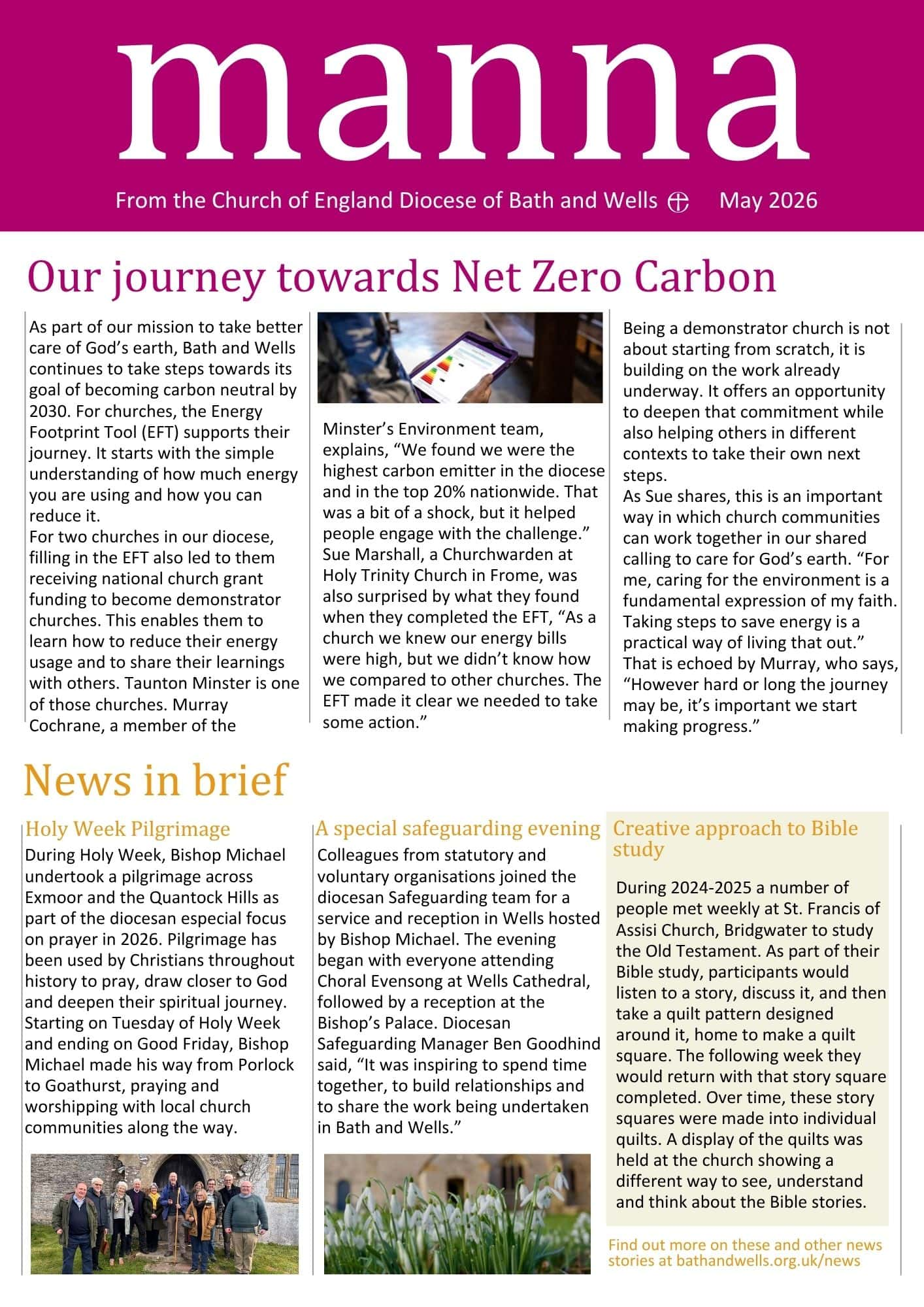
The May issue of the Manna mailing. This month's issue of our parish mailing focuses on caring for creation, with…
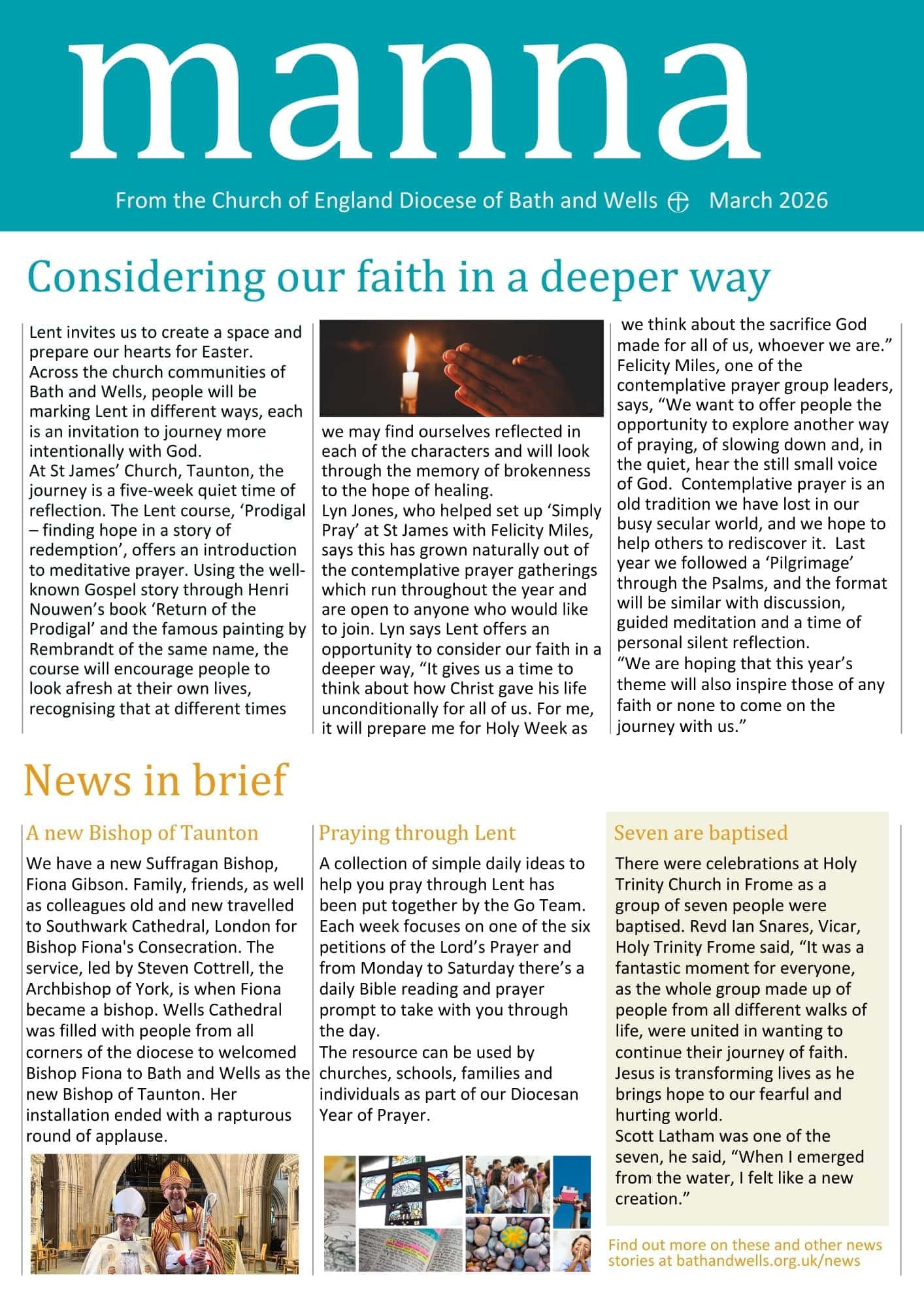
The March issue of the Manna mailing is now available. This month's issue of our parish mailing focuses on Lent,…

The February issue of the Manna mailing is now available. This month's issue of our monthly parish mailing focuses on…
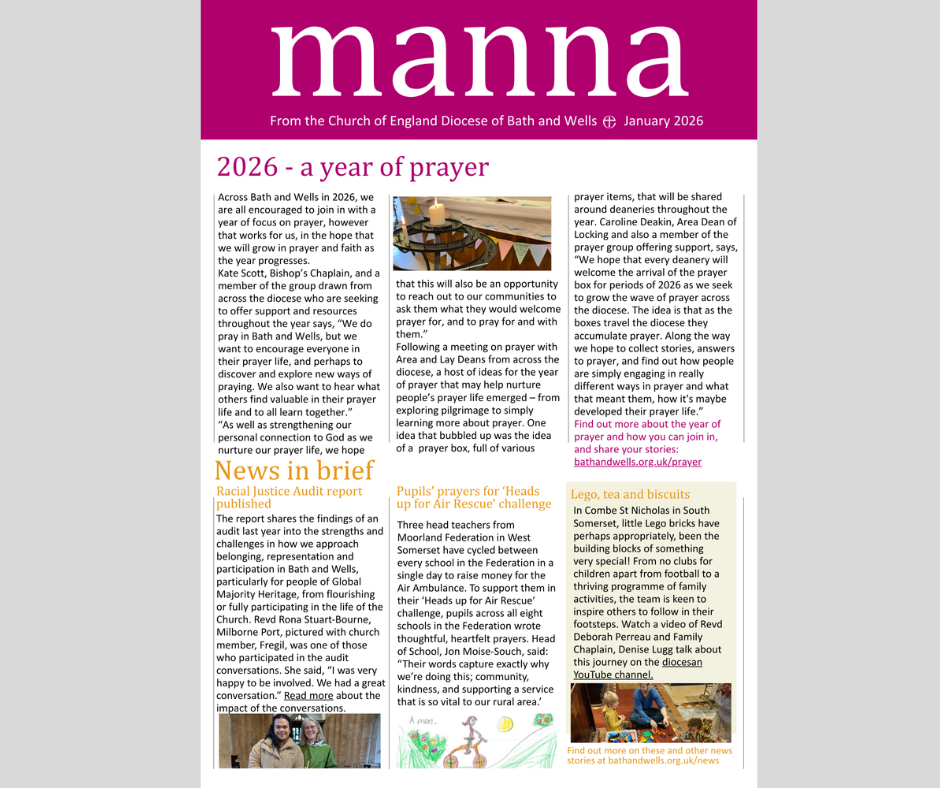
The January issues of Manna mailing and the Prayer Calendar are now available to download and read. It features news…
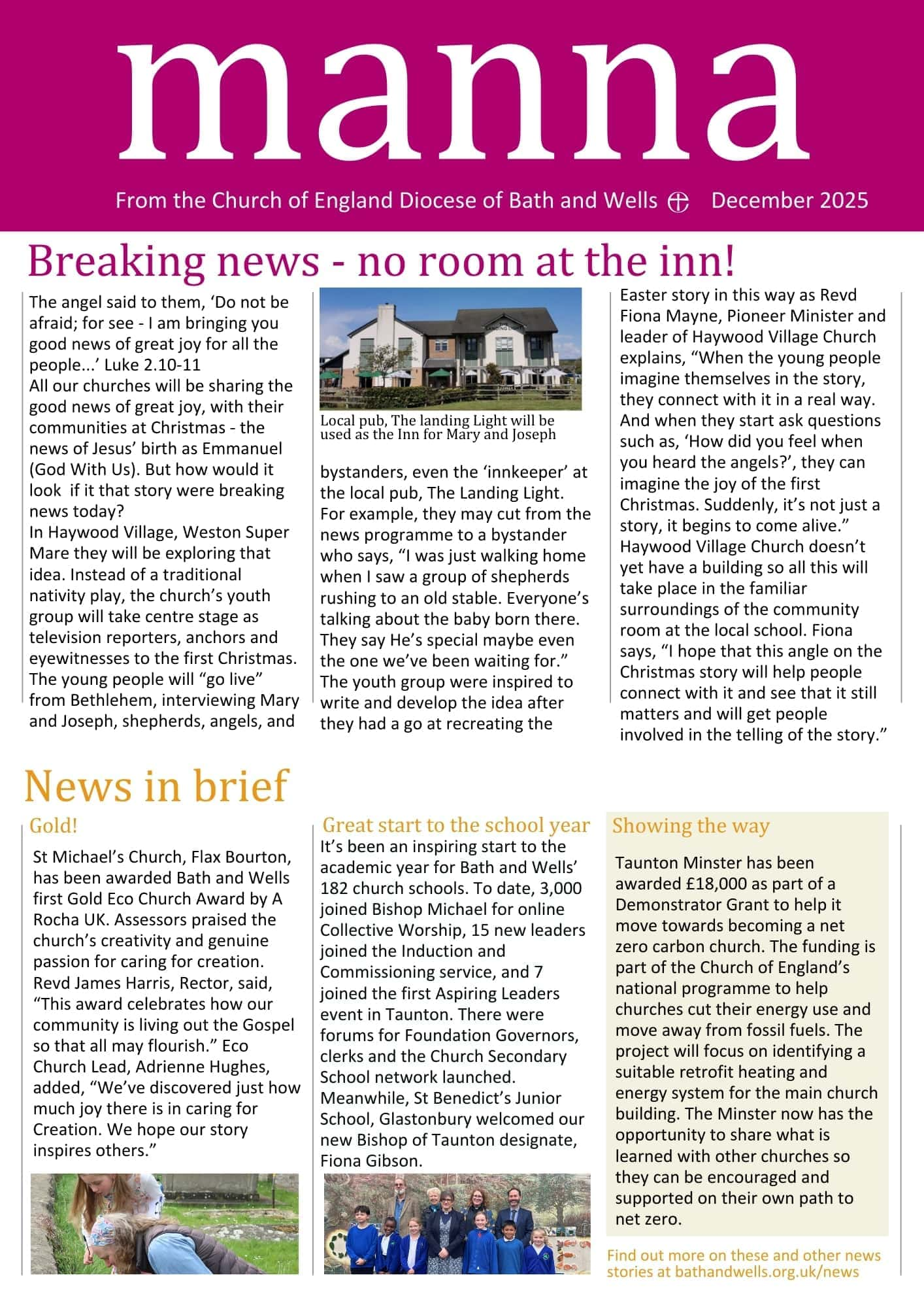
The Christmas issue of the Manna mailing is now available to download and read. With breaking news from Haywood Village…
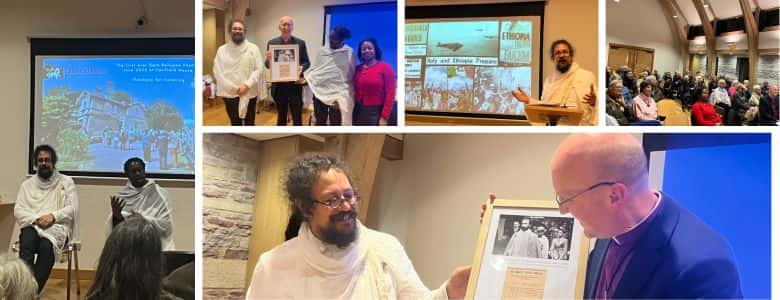
Wells Cathedral Education Room was packed as people gathered for an inspiring evening about Emperor Haile Selassie I in Bath…
What have you got planned for Good Friday at the Minster? Traditionally, we hold a three-hour meditation from 12 noon…
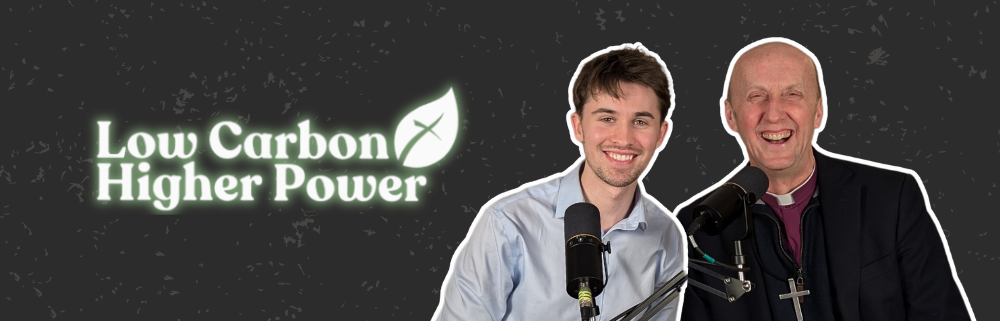
The Environment team's new podcast, Low Carbon, Higher Power, has been launched. Hosted by Dan Wills, Bath and Wells’ Net…
The Growing Good Toolkit is a free six session resource which helps churches answer Jesus’ call to love our neighbour,…