St Andrew’s Church, Burnham celebrates its historic angels 200 year anniversary
The group of 17th centaury angel statues with links to kings, queens, Sir Christopher Wren and Westminster Abbey arrived in Somerset two centuries ago.

A group of angel statues with links to kings, queens, Sir Christopher Wren and Westminster Abbey are being celebrated by a Somerset church community, two centuries after they first arrived in Somerset.
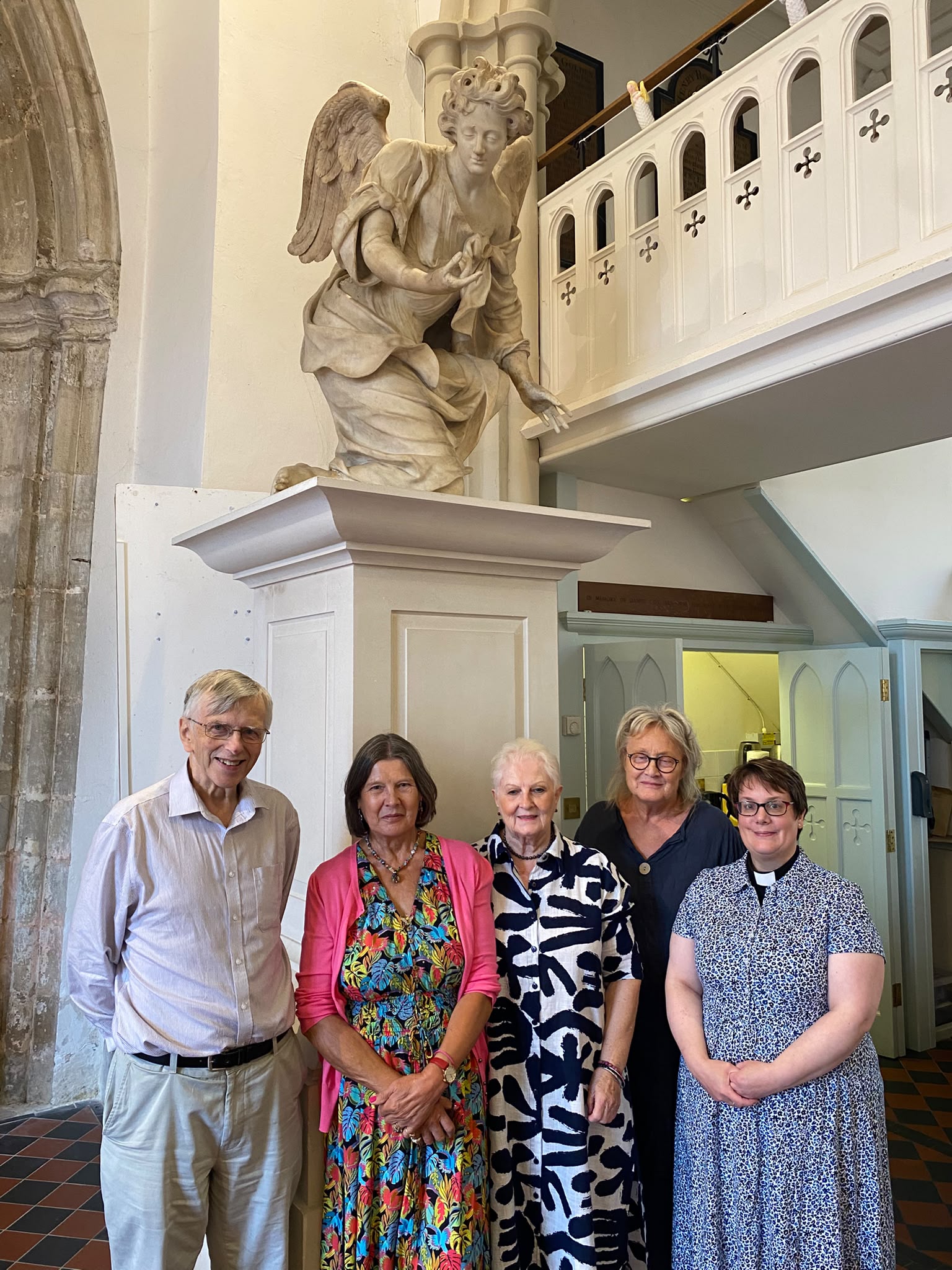
A group of angel statues with links to kings, queens, Sir Christopher Wren and Westminster Abbey are being celebrated by a Somerset church community, two centuries after they first arrived in Somerset. This year marks 200 years since the spectacular 17th-century angel carvings arrived in St Andrew’s Church, Burnham-on-Sea, and the church is using their extraordinary story to bring the whole community together.
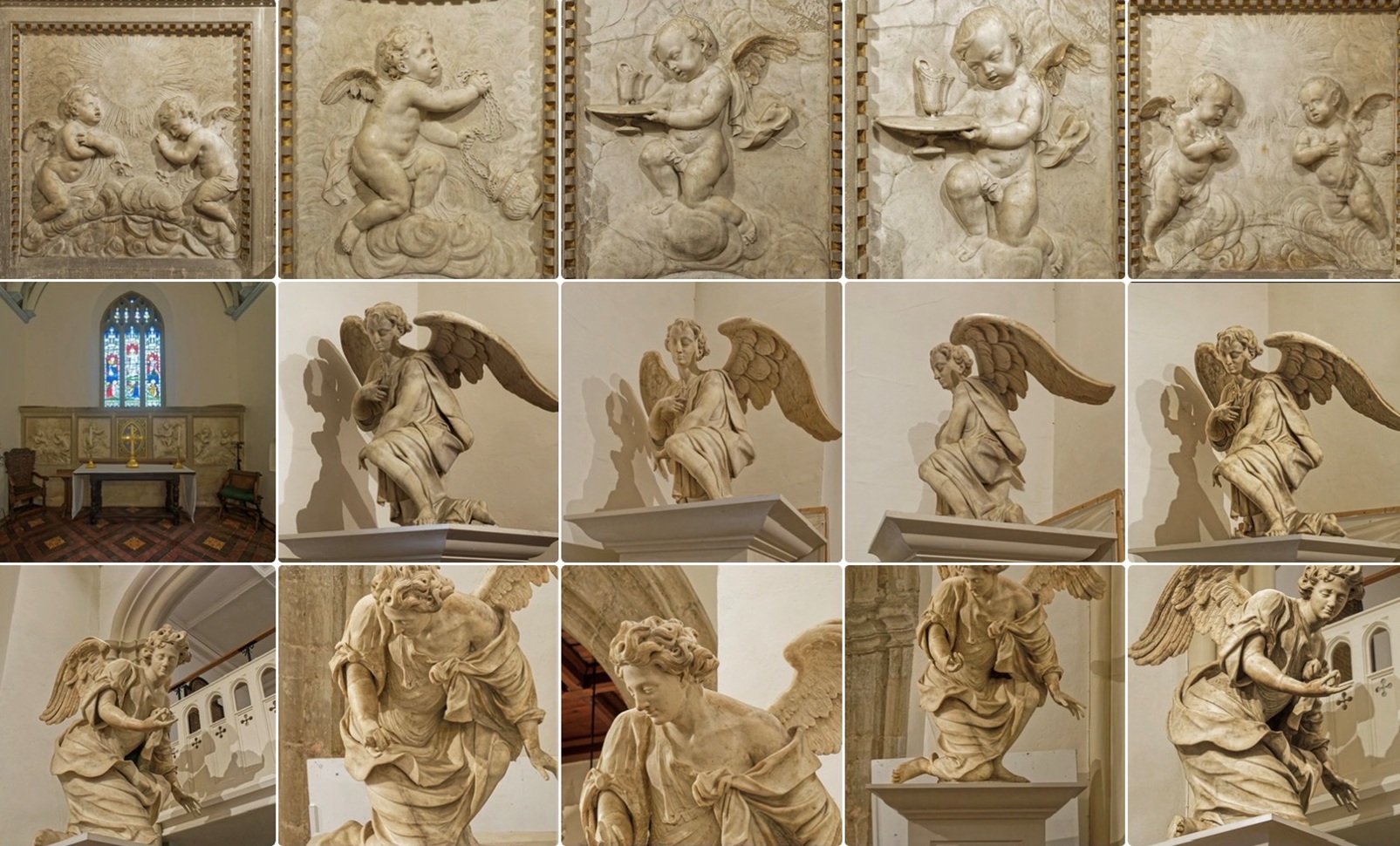
The angels originally formed part of a huge altarpiece commissioned by King James II for a new Roman Catholic chapel at Whitehall Palace. Sir Christopher Wren designed both the chapel and the altarpiece, with the carving undertaken by Grinling Gibbons and ArnoldQuellin. It is thought to have been completed around Christmas 1686. Just two years later, James II was deposed and William III and Mary II came to the throne. As
Protestants, they had little use for the Catholic chapel, and Gibbons was asked to dismantle the altarpiece. It was loaded onto barges and taken into storage at Hampton Court. This proved fortunate: a few years later, most of Whitehall Palace was destroyed by fire, with only the Banqueting House surviving.
In the early 1700s, while Wren was involved with work at Westminster Abbey, the Dean and Chapter petitioned Queen Anne for the altarpiece to be brought from Hampton Court and re-erected behind the Abbey’s high altar. There it remained for around a century. It appears to have been dismantled temporarily for George III’s coronation and then reinstated, but when it was removed again for the coronation of George IV it was never put back. By then tastes had changed and its Baroque style was considered out of keeping with the Gothic surroundings of Westminster Abbey.
The connection with Burnham came through Walker King, Bishop of Rochester, who was also Vicar of Burnham. He asked the Dean and Chapter if parts of the altarpiece could be given to one of his parishes. The surviving pieces were brought to St Andrew’s in 1826, apparently at his own expense. Although no contemporary record of their precise arrival has yet been found, newspaper reports from that year refer to a newly erected altarpiece in StAndrew’s Church.
When first installed at Burnham, the surviving pieces were arranged together at the east end of the church, blocking the window behind them. They remained in that form until around 1870, when the altarpiece was dismantled and its individual elements dispersed around the church.
Four carved panels remained behind the altar, with a later mosaic placed between them. The two large angels and a feature known as the ‘glory’, which are cherubic heads surrounding golden rays, were moved beneath the tower, where the angels were positioned facing the walls rather than looking inwards as originally intended. A smaller group of three angels with a Bible ended up in a storeroom at the vicarage and was only rediscovered many years later, apparently after the vicarage had been sold. It was subsequently returned to the church.
More recently, the two large angels have been restored, mounted on new pedestals and turned so that they face inwards once again. The sculptures still contain several historical mysteries. At the centre of the ‘glory’ there was originally a dove representing the Holy Spirit. At some point during the altarpiece’s time at Westminster Abbey, the dove was crudely removed and replaced with Hebrew lettering representing the name of God. The reason for this being done is unknown. Research undertaken by St Andrew’s suggests the dove was still present during the altarpiece’s early years at the Abbey, so the alteration may have been made later.
One possibility is that the change reflected shifting theological attitudes at Westminster. Francis Atterbury, the last strongly High Church Dean of Westminster, was implicated in Jacobite plots to restore the Stuart monarchy and was eventually defrocked and exiled. His successors were associated with a much more Low Church tradition. Whether the alteration dates from this period remains speculation, but it adds another intriguing question to the story.
Historic engravings also reveal how the altarpiece changed over time. When it stood in Westminster Abbey, two of the apparent niches at its base were actually doorways giving access to the chapel of Edward the Confessor behind the high altar. When the carvings came to Burnham, these openings were filled in by masons, but traces of their original arches can still be seen.
Other elements have disappeared altogether. An engraving of the altarpiece at Westminster shows a central panel carrying an inscription believed to have read words to the effect of “Glory to God in the highest, and on earth peace, goodwill towards men.” The panel came to Burnham but its present whereabouts are unknown.
Another important part of the original Whitehall arrangement was a painting that occupied the centre of the altarpiece. That painting survives and is now held by the Ringling Museum in Florida. Its history between the dismantling of the altarpiece and its eventual acquisition at auction in the early 20th century is unclear. The museum has, however, given St Andrew’s permission to reproduce the painting in a new booklet about the sculptures. Sir Christopher Wren’s original drawings of the Whitehall arrangement also survive and permission has been obtained to reproduce those.
Some further pieces of the original altarpiece remain at Westminster Abbey. They spent many years outside and became badly weathered before eventually being moved indoors.
Their survival provides another physical link between Westminster and the carvings now at Burnham.
The arrival of the altarpiece also became a fundraising opportunity. Walker King had links with infirmaries in Somerset, including those at Bridgwater and Wiveliscombe, and visitors were charged to enter the chancel and see the carvings, with the proceeds going to support good causes. Printed guides or engravings were apparently available in different qualities, including a cheaper version for those with lower incomes and another printed on higherquality paper. How long this arrangement lasted is uncertain. King himself died in February 1827, shortly after the installation, and, having become blind in his later years, may neverhave seen the altarpiece in its new home.
Exactly how such large and elaborate carvings travelled from Westminster to Burnham, whether wholly by land, partly by sea or through some combination of routes, is another
unanswered question.
The group of 17th centaury angel statues with links to kings, queens, Sir Christopher Wren and Westminster Abbey arrived in Somerset two centuries ago.
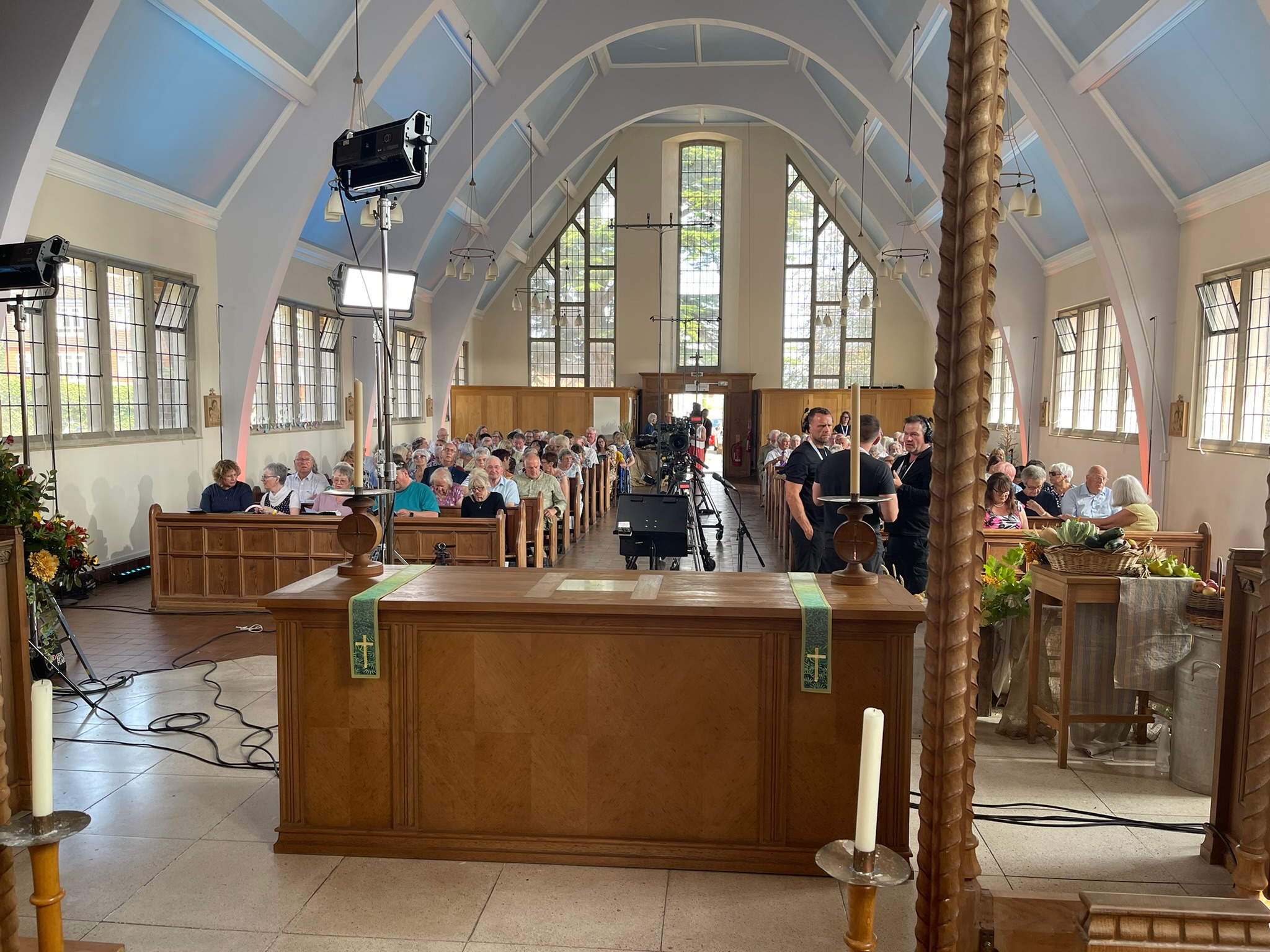
Members of Holy Trinity Hamp in Bridgwater welcome the BBC to their church for the forthcoming harvest edition of Songs of Praise.
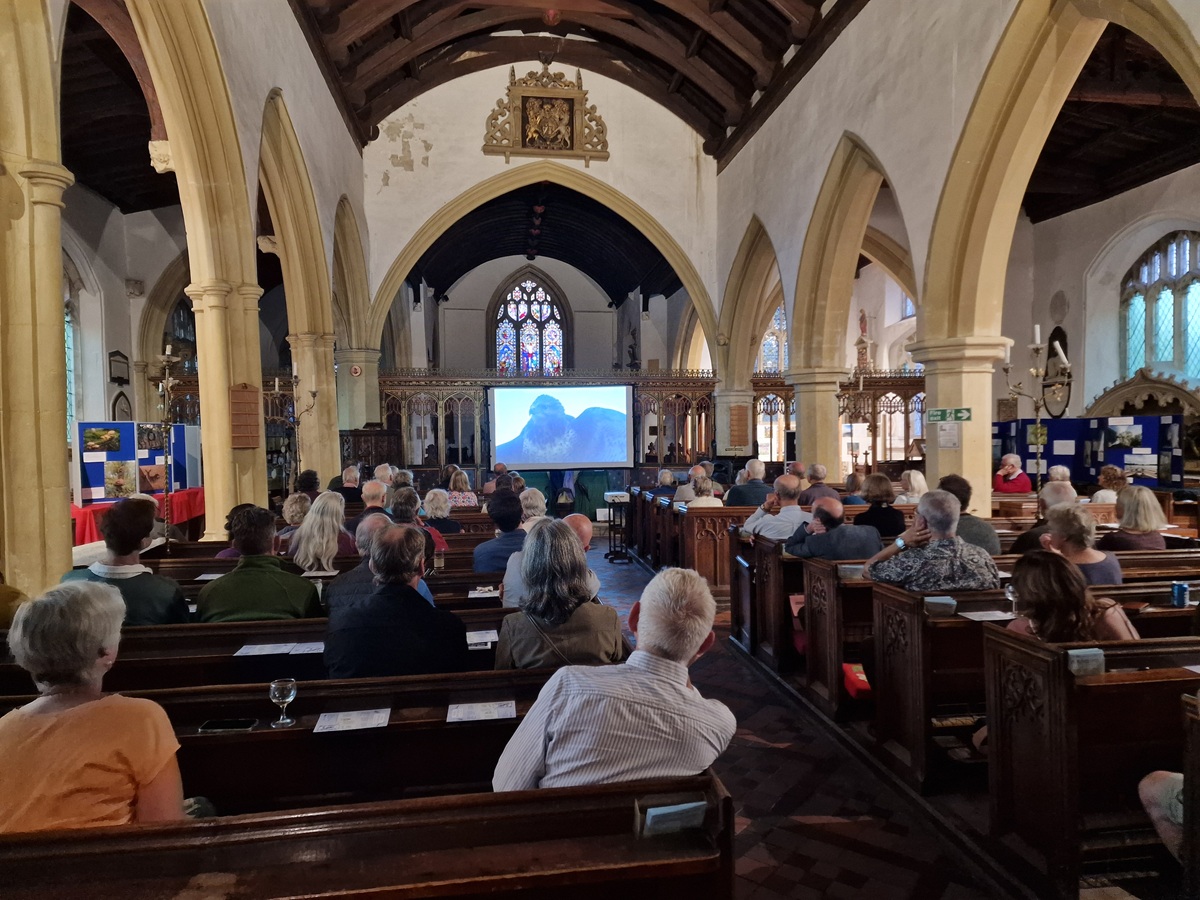
The Chew Valley Nature Photography Festival brought photographers, conservationists and local residents together to celebrate the biodiversity of the area and reflect on the call to care for God’s creation.
Across the country and throughout our diocese farmers are struggling to deal with the effects of the intense heat, lack of rainfall and the outbreak of the disease, bluetongue.
The service in Porlock highlighted the story of community, forgiveness and reconciliation.
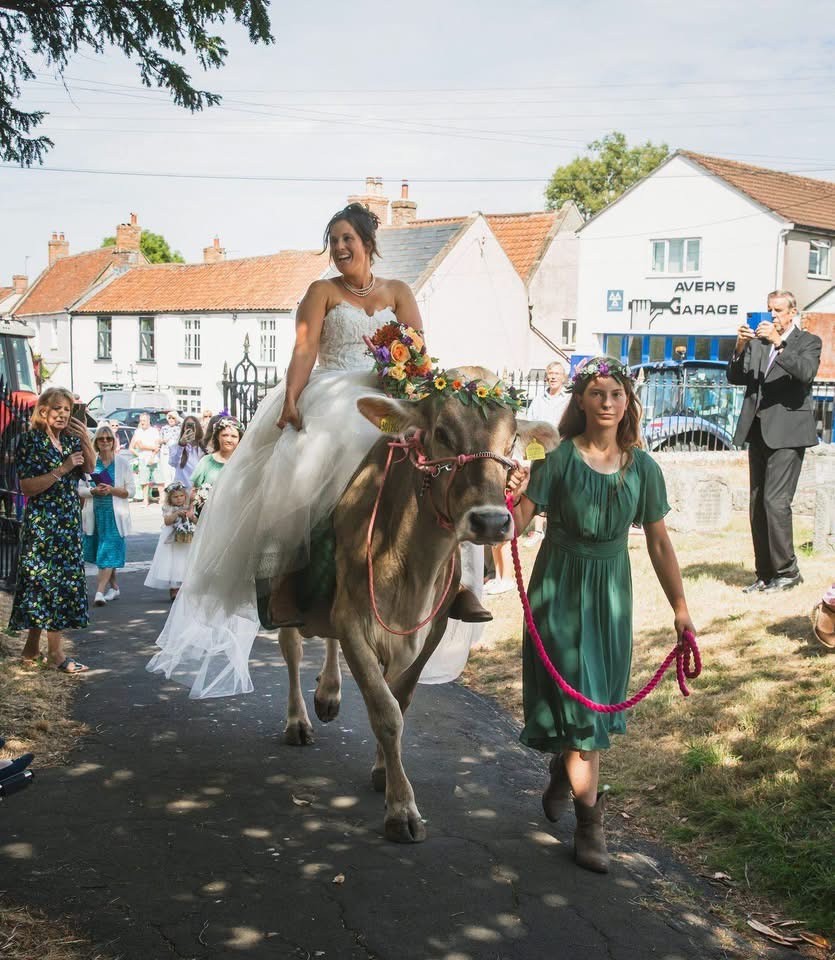
The arrival of the Bride at a recent wedding at Holy Cross, Mark caused a something of stir both locally and in the national and even international press.
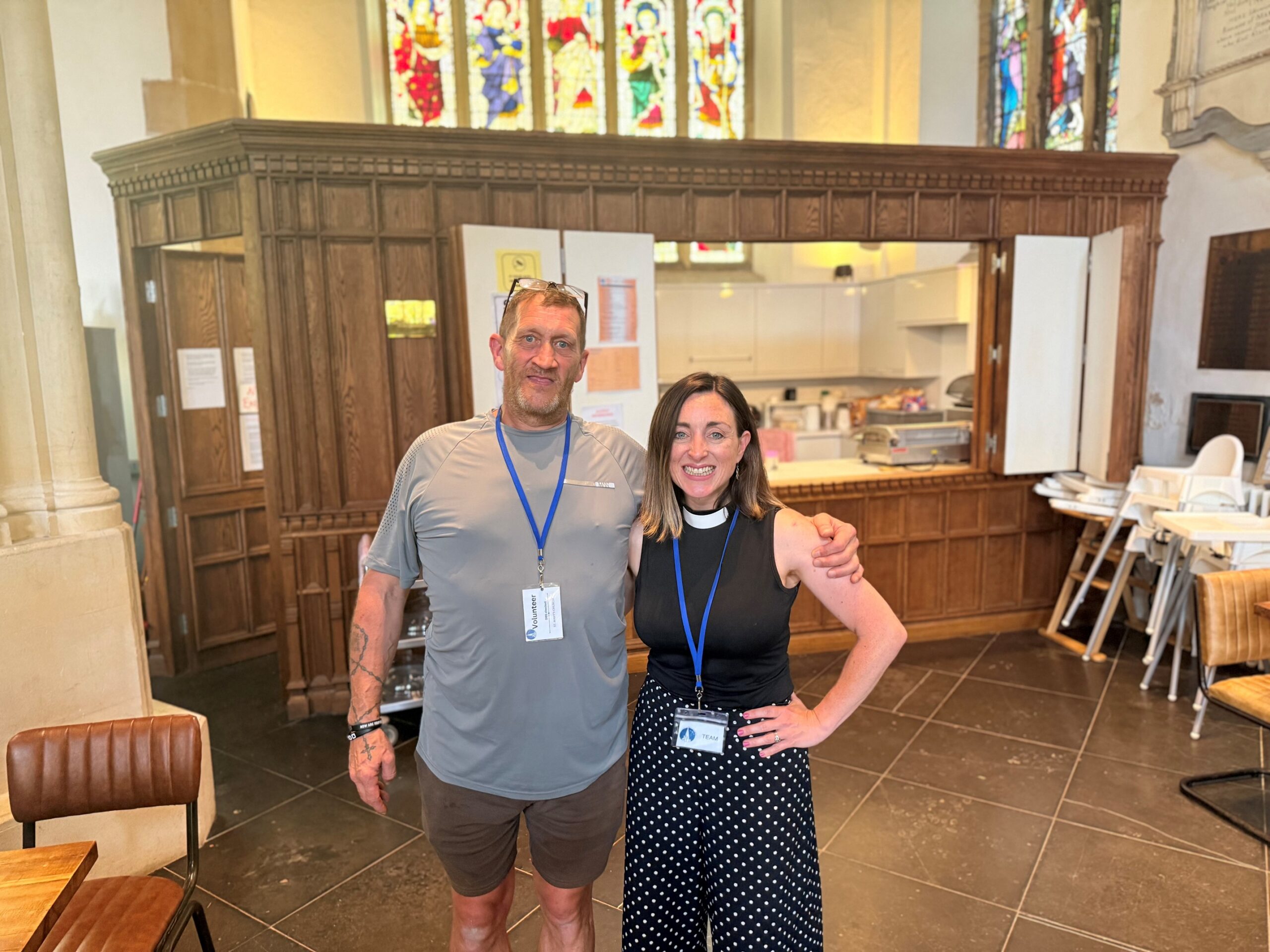
Tony O'Mara, who has overcome his own 40-year addiction, has been nominated for the BBC award for his work supporting others in the place that helped him change his life.
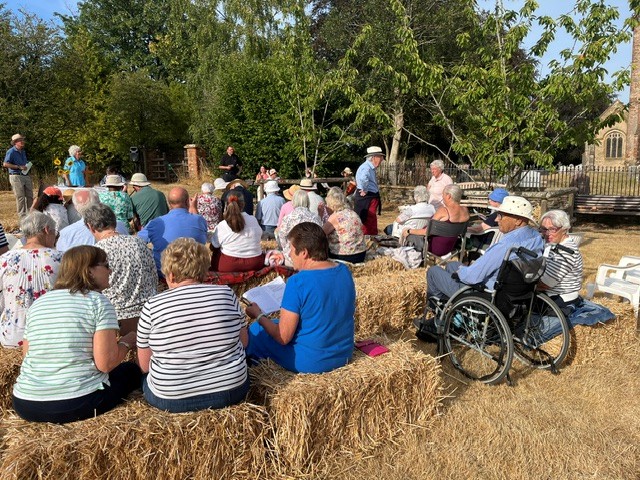
On the first Sunday in August, Bishop Fiona joined the South Quantock Benefice Lammas service.

Children from St John’s CofE Infants’ School, Glastonbury, have been finding a cool and peaceful space in St John’s Church…
Each year, the National Parliamentary Prayer Breakfast brings MPs, Peers and church leaders together in the heart of Westminster to…