Church clock restoration uncovers its historic significance
The community of St Catherine’s Church, Montacute, has been told by experts that it may be home to one of the oldest working timepieces in the country, follow a recent…
The community of St Catherine’s Church, Montacute, has been told by experts that it may be home to one of the oldest working timepieces in the country, follow a recent assessment that dates its clock back to the 1400s.
Originally believed to have been made in the 1600s, around the time of the Reformation, the clock’s historical significance was uncovered during a restoration assessment in 2024. Mark Lidster, the Buildings Adviser for the Diocese of Bath and Wells, who is also the Clocks Adviser to the Diocesan Advisory Committee for the Care of Churches (DAC), concluded that the clock’s mechanism predates many known medieval timepieces.
The clock was removed on Thursday, 20 March under the watchful eye of the Montacute church and village community, including 200 children from the local school, as well as local television news crews and members of diocesan support services who have assisted the church on all aspects f the restoration. A fundraising effort is now underway to support the clock’s restoration and the church’s plans to create a dedicated exhibition space, featuring audio-visual presentations on its history. Restoration work will now begin. A special rededication ceremony is planned for summer 2025 on the clock’s return. The service will mark its historical and cultural importance and also honour all the volunteers who have maintained it over the years.
Nic Lacock, Churchwarden of St Catherine’s, who is leading the project to restore the clock, says, “Discovering the hugely significant antiquity of the Montacute clock has been an incredible experience for me, the church community and the whole of the village. Verifying its possible manufacturing date, piecing together that it was in all probability made in the village smithy from iron ingots, probably sourced in the hills around Montacute, was exciting enough. However, the greatest joy of this has been uncovering the human stories behind it. Of Humphrey Hamlin’s remarkable determination to conserve the clock, the incredible service of Eric Rogers, and the links to the Baker family whose ancestors made the dial in 1815 in the house where Humphrey now lives.
He adds, “The clock has served the village for centuries and it seems only right that it is given the opportunity to tell its own story to the present-day village and the wider world. Already the community has come behind our project to share that story in a host of creative ways, and I am sure that the clock is at the start of a very exciting new chapter of its story.”
The clock has been a central part of Montacute village life, maintained by dedicated volunteers, including the late Eric Rogers, who wound it daily for 67 years, reportedly never taking a holiday to ensure its upkeep. Eric inherited the duty in 1914, after promising his uncle Maurice, the previous caretaker, he’d keep the clock running while he went to fight in the Great War. Tragically, Maurice never returned. When Eric retired, local engineer and clock enthusiast Humphrey, who is now 93, took over its upkeep, ensuring its continued operation, even taking the clock down to repair it in his workshop in 1987. Humphrey said, “they told me it couldn’t be repaired – and I thought ‘that’s nonsense’ so I asked to be allowed to do it.”
In addition to the clock, restoration efforts have revealed other historical artifacts, including a set of large iron keys dating back perhaps to Reformation times. These items will be displayed alongside the clock when it is reinstalled in the church.
Through the project to celebrate the history of the clock, the church hopes to strengthen community ties by celebrating the country’s rich heritage and give the 4,000 plus annual visitors to the church a chance to see the historic working timepiece, thanks to improved lighting and the installation of a camera feed of the interior of the clock tower.
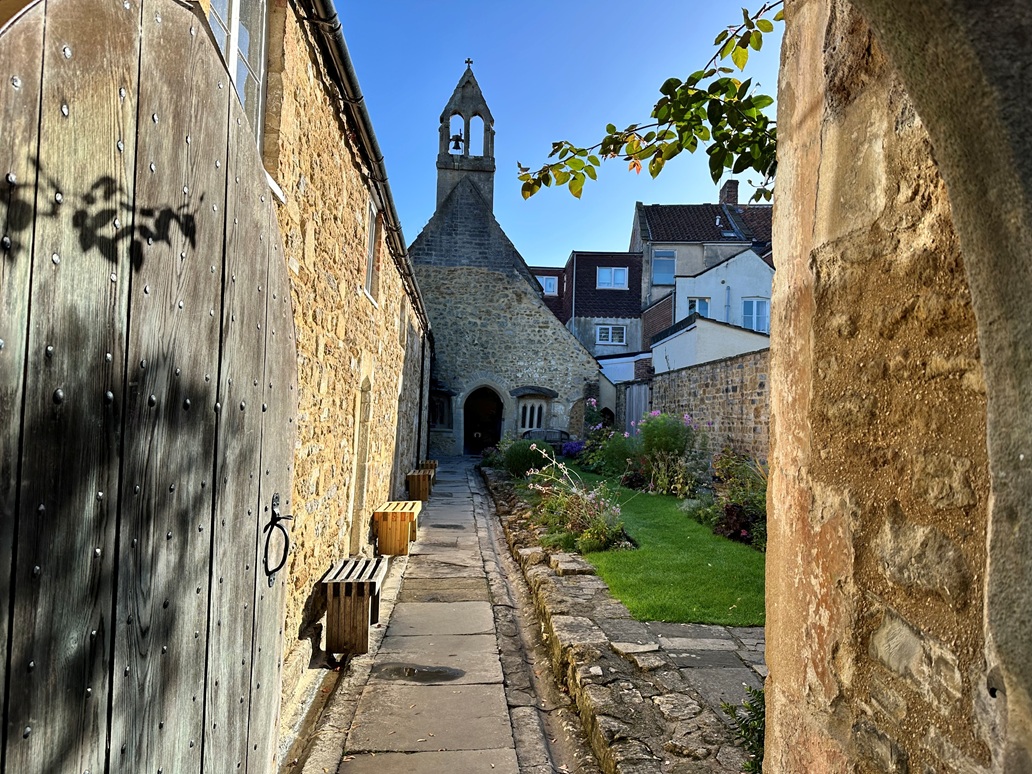
Tucked away down a narrow pathway, behind a large wooden door in the heart of Glastonbury, lie St Margaret’s Chapel and The Royal Magdalene Almshouses, a peaceful sanctuary that has welcomed pilgrims and visitors for more than 700 years.
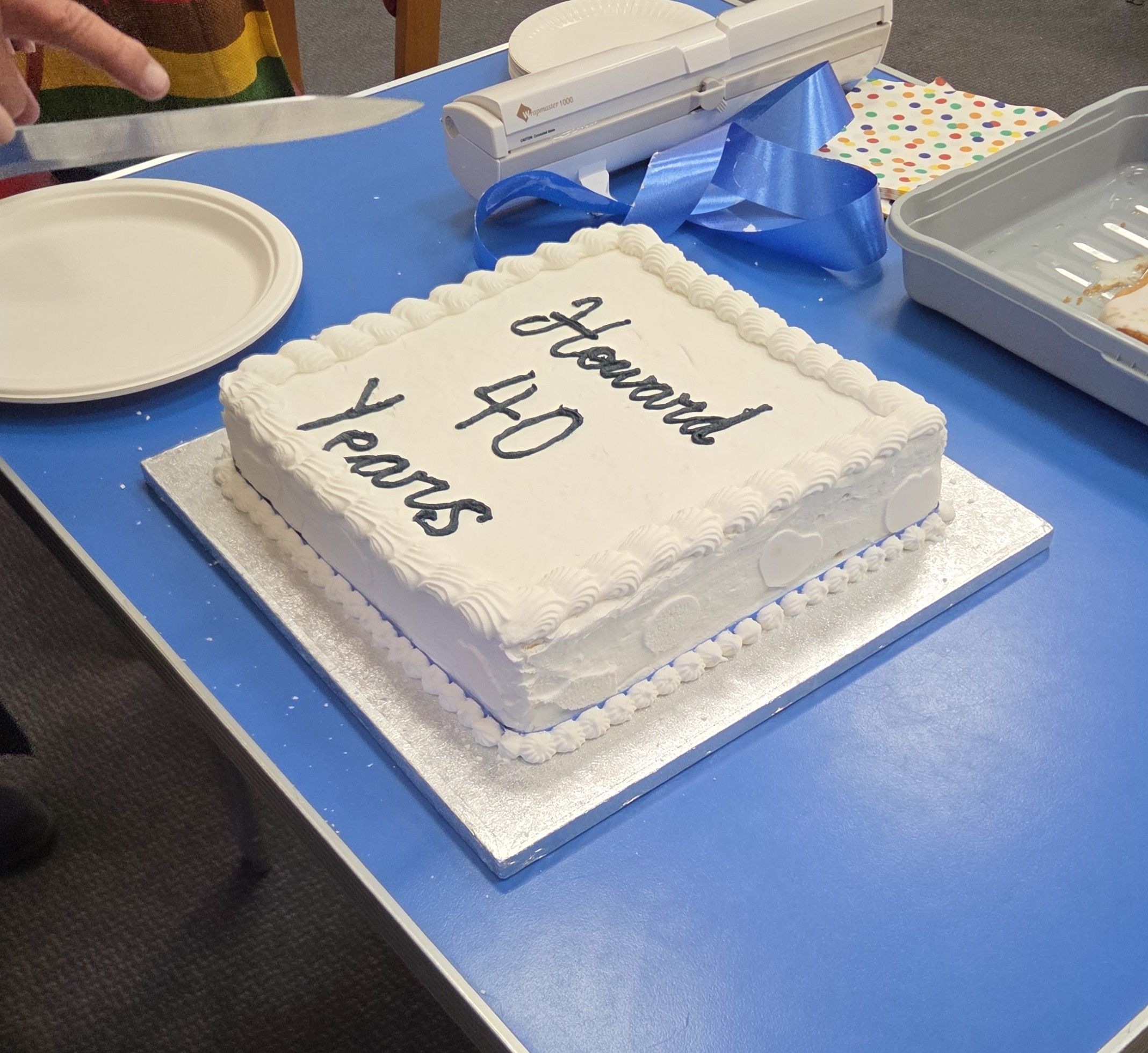
The benefice of Holy Trinity Yeovil with St Mary Magdalene Barwick marked 60 years of combined ministry between two of their licensed lay readers earlier this month.
For many of us in church life, safeguarding can feel like something imposed from the outside, but what if we've been looking at it all wrong? What if safeguarding isn't about compliance at all, but about the very heart of what it means to follow Jesus?
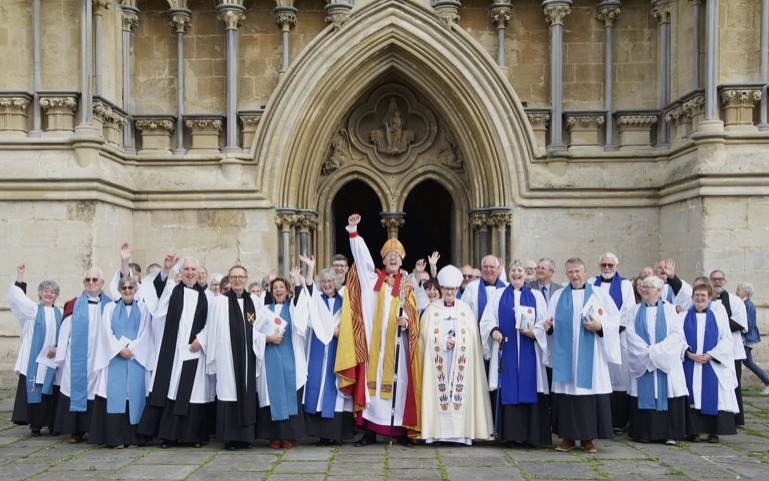
Last week, Bishop Michael joined the Diocesan Board of Education to thank Tracey Khodabandehloo for her years of service for the schools in the Diocese of Bath and Wells.
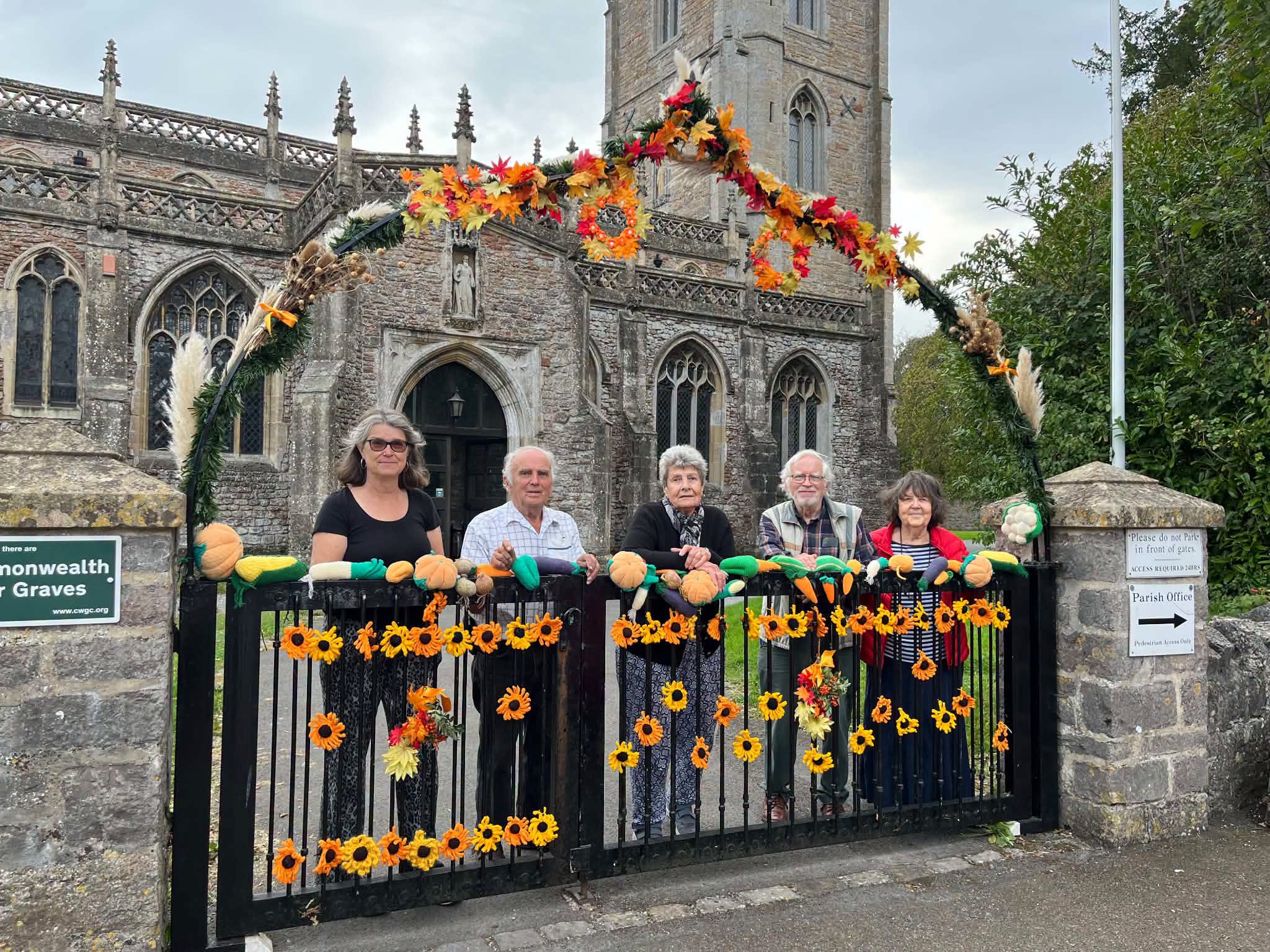
Churches across the diocese have been marking Harvest with services, and community activities, giving thanks to God for the fruit of the land and for the farmers who work to provide the food we eat.
You may notice that our Diocese of Bath and Wells website looks a little different.
Manage Consent
To provide the best experiences, we use technologies like cookies to store and/or access device information. Consenting to these technologies will allow us to process data such as browsing behavior or unique IDs on this site. Not consenting or withdrawing consent, may adversely affect certain features and functions.
Functional
Always active
The technical storage or access is strictly necessary for the legitimate purpose of enabling the use of a specific service explicitly requested by the subscriber or user, or for the sole purpose of carrying out the transmission of a communication over an electronic communications network.
Preferences
The technical storage or access is necessary for the legitimate purpose of storing preferences that are not requested by the subscriber or user.
Statistics
The technical storage or access that is used exclusively for statistical purposes.The technical storage or access that is used exclusively for anonymous statistical purposes. Without a subpoena, voluntary compliance on the part of your Internet Service Provider, or additional records from a third party, information stored or retrieved for this purpose alone cannot usually be used to identify you.
Marketing
The technical storage or access is required to create user profiles to send advertising, or to track the user on a website or across several websites for similar marketing purposes.