Solar panels on the road to Ukraine
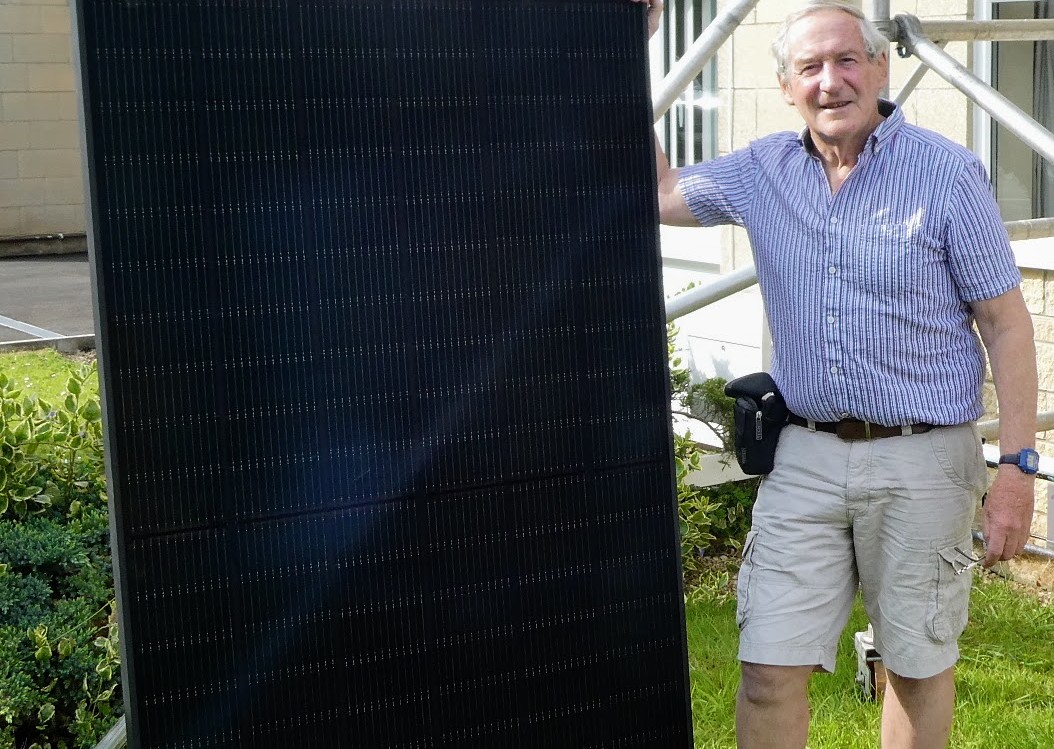
Hundreds of solar panels are en-route from Bristol to a church in Svalyava, Ukraine.

With energy costs set to increase again, now is an important time to review your energy bills, particularly for churches without fixed-rate contracts.
With energy costs set to increase again, now is an important time to review your energy bills, particularly for churches without fixed-rate contracts.
Our analysis of Energy Footprint Tool (EFT) returns suggests that many churches could reduce their energy expenditure without changing how much energy they consume. Inappropriate tariffs, incorrect billing, high standing charges and unsuitable electricity supply arrangements could be costing our churches thousands of pounds unnecessarily each year. Our Net Zero Project Lead, Dan Wills wants to encourage all parishes to review their expenditure and said:
“A huge thank you to all our churches that took the time to complete this year’s Energy Footprint Tool. The information you provide does far more than help us understand our carbon emissions – it enables us to identify practical opportunities to reduce your energy bills and provide more targeted support. Our latest analysis suggests that up to £100,000 could be saved annually across our churches through reviewing energy tariffs, billing and supply arrangements alone. This is money that could instead be supporting the life, mission and ministry of our churches, and demonstrates the real value of completing the EFT each year.”
Are you paying the correct VAT and Climate Change Levy (CCL)?
Most churches will qualify for tax relief on energy used for charitable non-business activities. Subject to eligibility, churches should currently be paying:
If you are paying 20% VAT or CCL, contact your supplier to check your eligibility, request the relevant declaration forms and enquire about recovering historic overpayments. Charitable status alone does not guarantee eligibility, particularly where buildings are used for commercial activities.
Are you on an appropriate energy tariff?
Churches generally operate on business energy contracts and are not protected by the domestic energy price cap.
Check your latest energy bill or contact your supplier to establish:
Deemed and out-of-contract tariffs can be particularly expensive, whilst variable tariffs leave churches exposed to price increases. Fixed-rate contracts can provide greater financial certainty, although their suitability will depend on the rates and terms offered.
Could you find a more suitable tariff?
Have a recent energy bill and your annual energy consumption (kWh) to hand. You can obtain quotations directly from suppliers, through a business energy broker or through Parish Buying.
Always compare the total annual cost, rather than just the unit rate. For infrequently used churches, standing charges can account for a significant proportion of annual expenditure. Some churches have successfully negotiated reduced or zero standing charges, so this may also be worth exploring.
When obtaining quotations, consider the environmental credentials of individual tariffs.
How can we help?
The Environment Team will be contacting churches that completed the most recent Energy Footprint Tool, prioritising those where our analysis identifies the greatest potential financial savings. If you are concerned about your energy costs or would like assistance reviewing your bills, tariffs or electricity supply arrangements, please contact Sara Harbron, Diocesan Environment Officer.
The Diocese provides impartial information and guidance and does not recommend or endorse individual suppliers, tariffs or brokers. All procurement decisions remain the responsibility of the PCC.
Hundreds of solar panels are en-route from Bristol to a church in Svalyava, Ukraine.
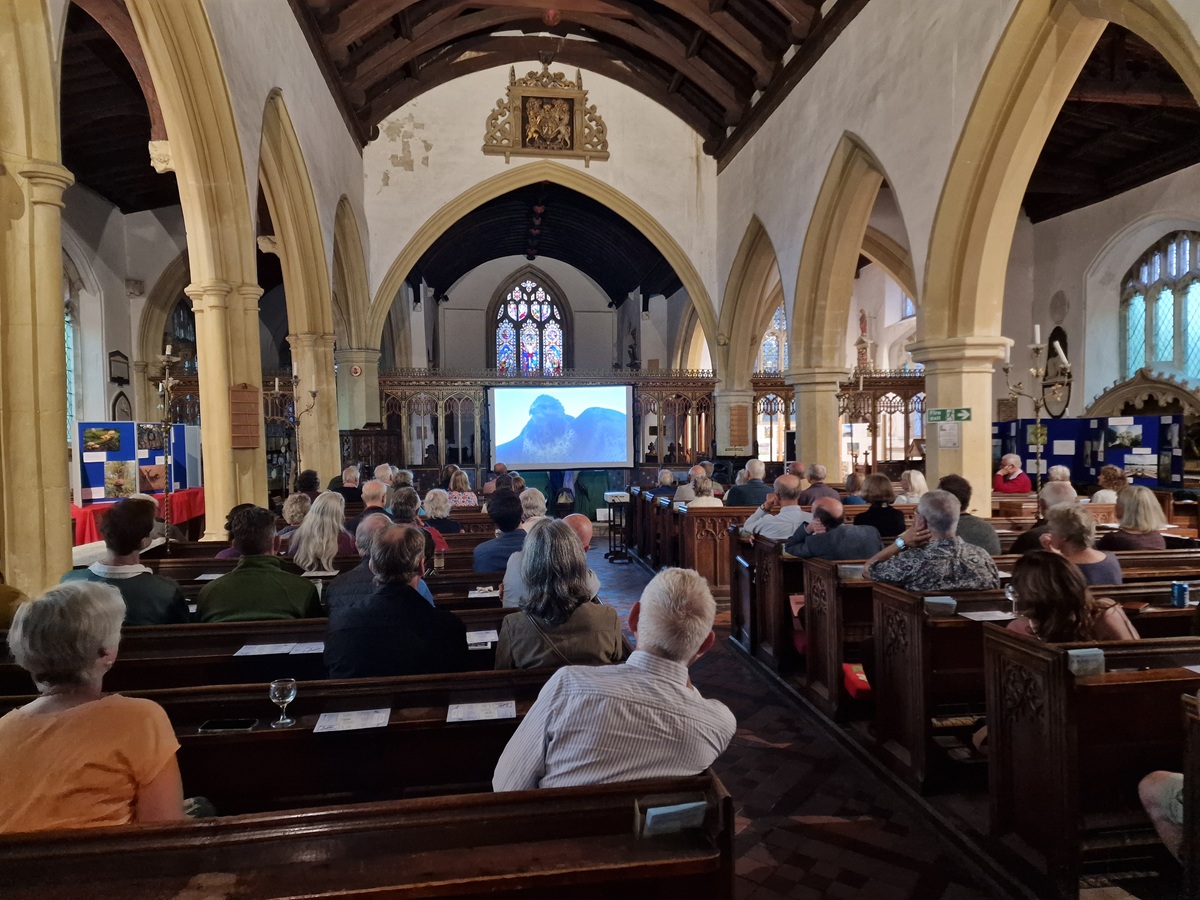
The Chew Valley Nature Photography Festival brought photographers, conservationists and local residents together to celebrate the biodiversity of the area and reflect on the call to care for God’s creation.
A huge thank you to everyone who took the time to complete the Energy Footprint Tool (EFT) this year.

The Church of England is introducing the Building Management Portal, a new national digital system for managing applications relating to…
The Diocese of Bath and Wells has become the first diocese to receive a Gold Award Eco Church Award for…

General Synod has welcomed three significant milestones in its response to the climate and nature crises when it met earlier…
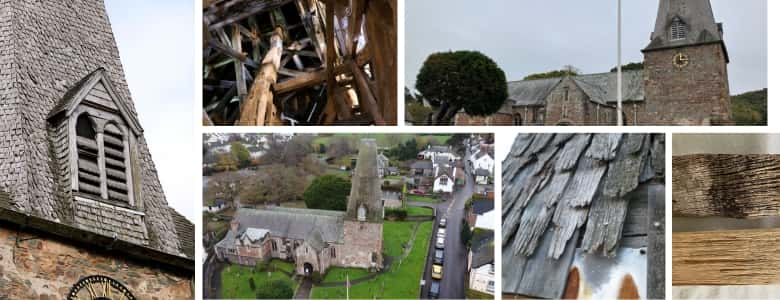
Photos: St Dubricius Church Parochial Church Council and Freeline Gfx St Dubricius Church, Porlock has been awarded more than £1.4 million…
Churches across the Diocese of Bath and Wells spent around £1 million on energy last year - a striking reminder…
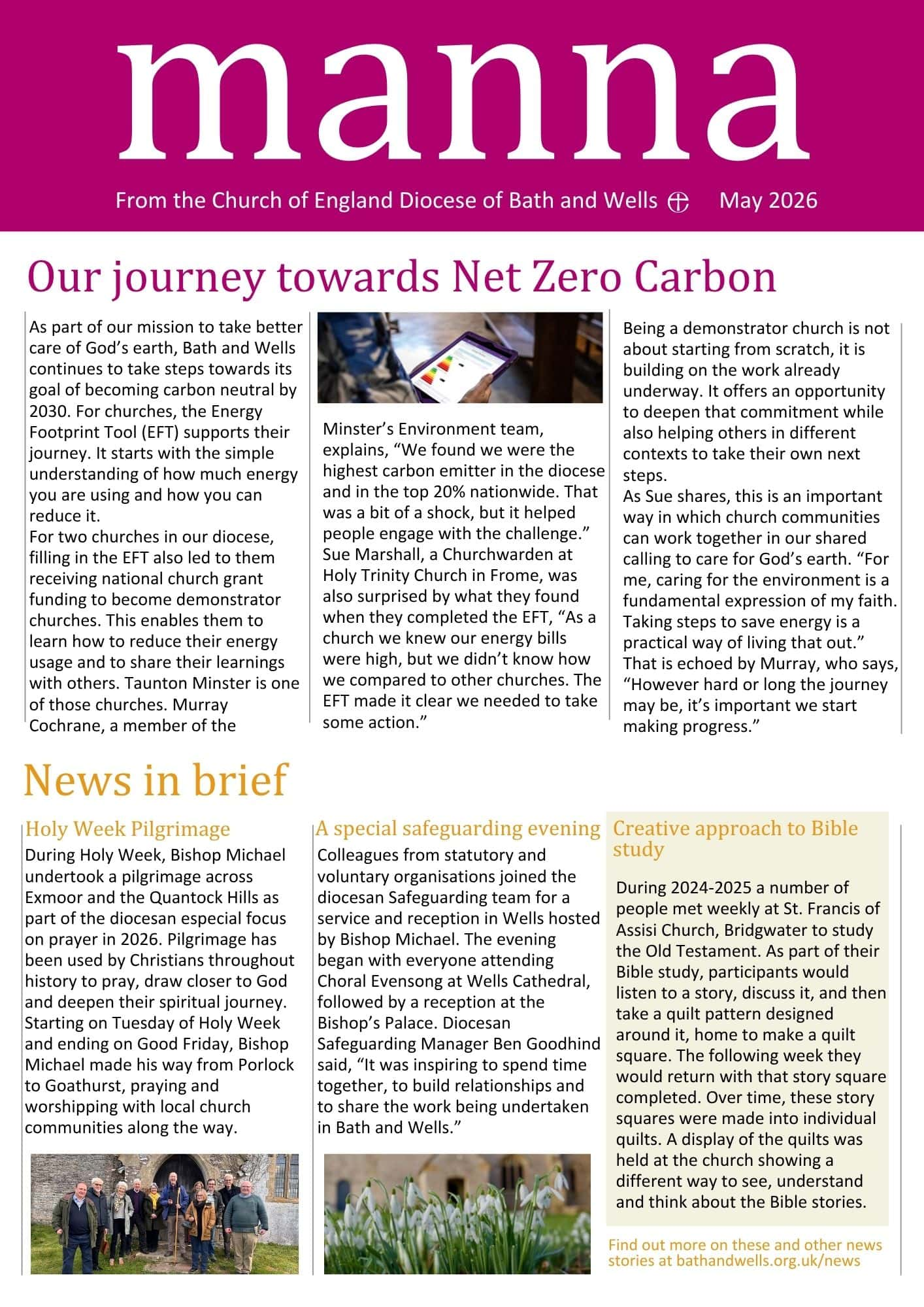
The May issue of the Manna mailing. This month's issue of our parish mailing focuses on caring for creation, with…
The Bath University team is using 3D laser scanning and community engagement to decarbonise and unlock new uses for St…