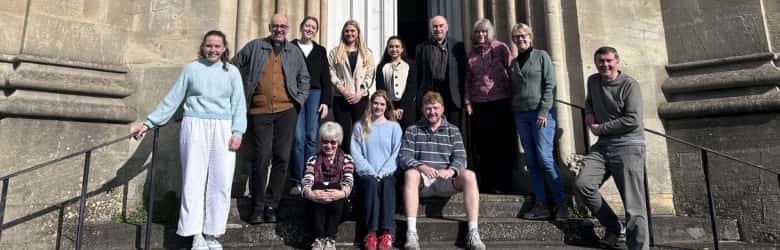
Earlier this month a multi-disciplinary team from the University of Bath visited the Bishop’s Palace in Wells to take their first look at the buildings which will form part of…
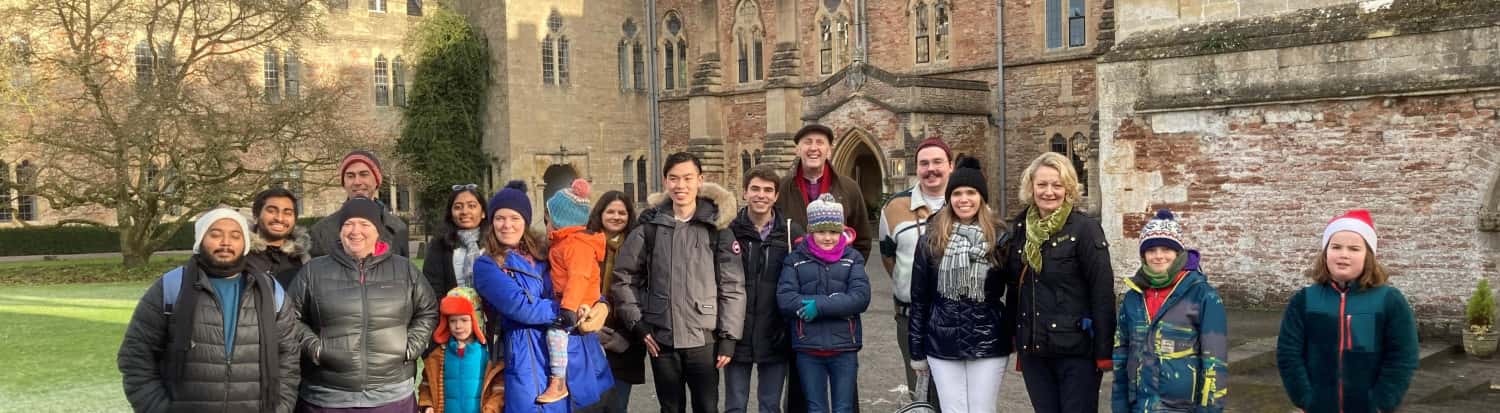
Earlier this month a multi-disciplinary team from the University of Bath visited the Bishop’s Palace in Wells to take their first look at the buildings which will form part of their study project. Each year the ‘Vertically Integrated Decarbonisation Project’ brings together students and staff from a range of disciplines to think about how energy usage in buildings in different places can be decarbonised. This year, the team have agreed to look at the Bishop’s Palace.
Led by Professor Marcelle McManus and by Dr Rick Lupton, the team were welcomed by Bishop Michael and by Jan Wallwork Clarke, Chief Executive of the Palace Trust. Professor McManus is Bath’s Professor of Energy and Environmental Engineering and Co-Director in the Centre for Sustainable and Circular Technologies to the Institute for Sustainability. Dr Lupton is Senior Lecturer in Mechanical Engineering. They were joined by students and staff from Bath’s Departments of Mechanical Engineering, Chemical Engineering, Data Science, Robotics and Economics.
Bishop Michael said, “The Palace presents both big challenges but also huge opportunities for decarbonisation. At one level it’s a large, cold mediaeval building that’s governed by all the heritage legislation of being a Grade 1 Listed Building. But at the same time it contains multiple opportunities for hydro power, solar power, improved insulation and the use of heat pumps.”
Speaking after the team visit to The Bishop’s Palace, Professor McManus said, “The Bishop’s Palace is a fascinating place to study as it can help us learn about how to decarbonise historic buildings, which make up a significant part of our building stock. The Bishop’s Palace is more protected than most, but it’s not alone in having leaky windows and large spaces to heat.
“The students involved come from multiple disciplines and therefore we can work together to address multiple challenges, for example exploring how much energy onsite renewables might produce, and where the biggest demand reductions might be applied.”
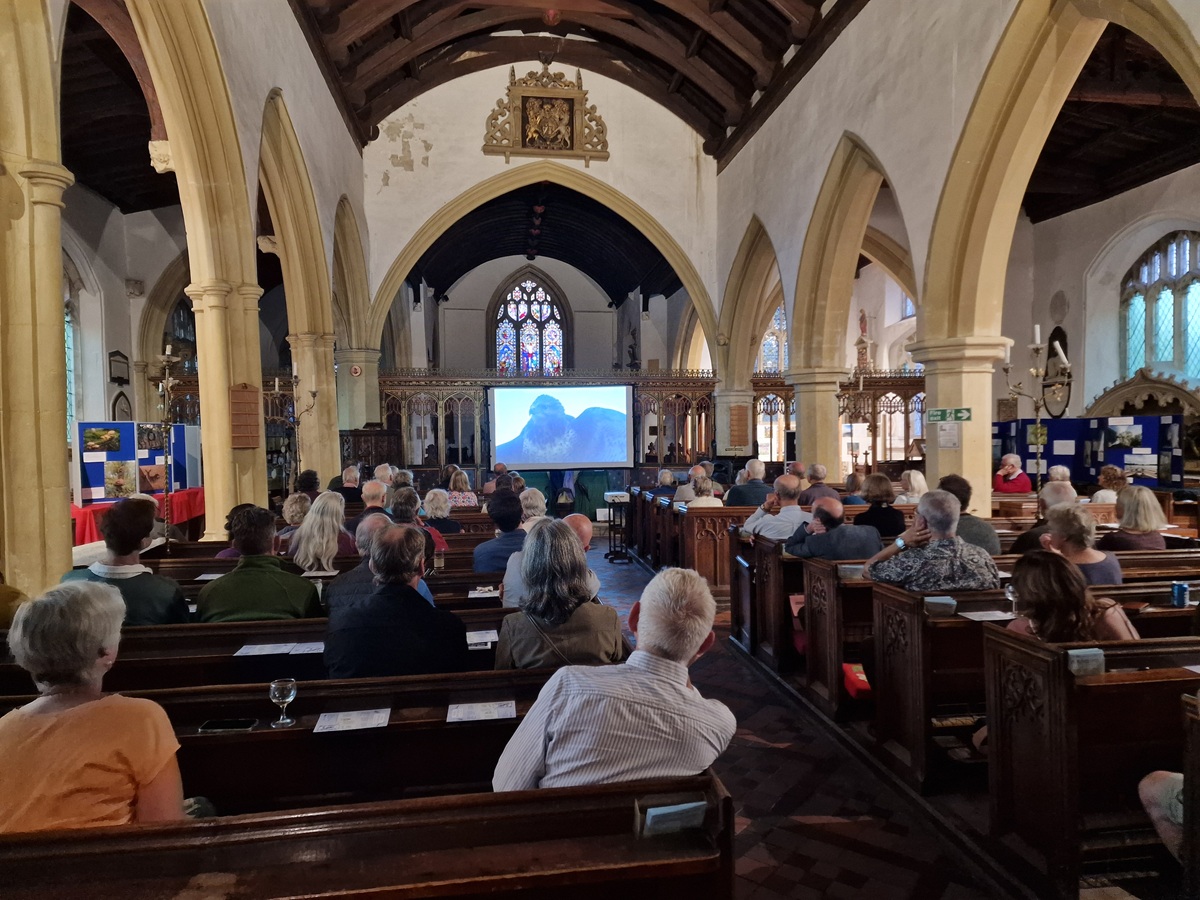
The Chew Valley Nature Photography Festival brought photographers, conservationists and local residents together to celebrate the biodiversity of the area and reflect on the call to care for God’s creation.
Bath and Wells first Gold Eco Church Award winners, Flax Bourton Church, St Michael & All Angels, came together with…
Manage Consent
To provide the best experiences, we use technologies like cookies to store and/or access device information. Consenting to these technologies will allow us to process data such as browsing behavior or unique IDs on this site. Not consenting or withdrawing consent, may adversely affect certain features and functions.
Functional
Always active
The technical storage or access is strictly necessary for the legitimate purpose of enabling the use of a specific service explicitly requested by the subscriber or user, or for the sole purpose of carrying out the transmission of a communication over an electronic communications network.
Preferences
The technical storage or access is necessary for the legitimate purpose of storing preferences that are not requested by the subscriber or user.
Statistics
The technical storage or access that is used exclusively for statistical purposes.The technical storage or access that is used exclusively for anonymous statistical purposes. Without a subpoena, voluntary compliance on the part of your Internet Service Provider, or additional records from a third party, information stored or retrieved for this purpose alone cannot usually be used to identify you.
Marketing
The technical storage or access is required to create user profiles to send advertising, or to track the user on a website or across several websites for similar marketing purposes.